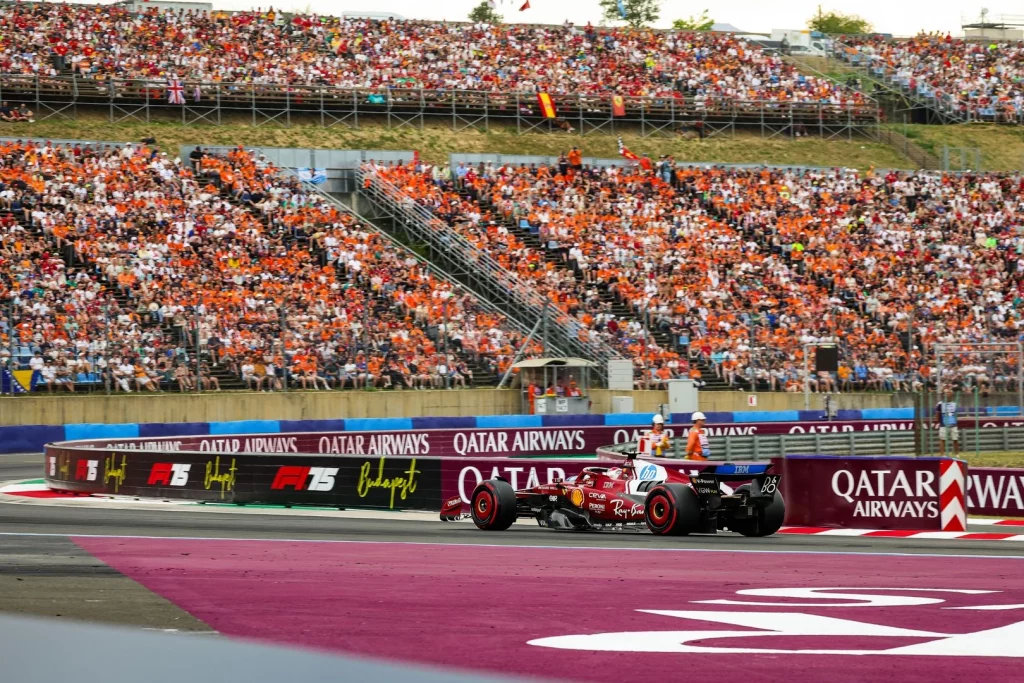
Every Formula 1 season has one race that marks a turning point before the championship enters its second half. That race is the Hungarian Grand Prix.
More than just another stop on the calendar, the Hungarian Grand Prix represents one of the most significant moments in Formula 1 history. It was the sport’s first venture behind the Iron Curtain, where politics, business, and motorsport came together to reshape the future of Formula 1.
The First Formula 1 Race Behind the Iron Curtain
The Hungarian Grand Prix made its debut in 1986.
At the time, Hungary was still part of the Eastern Bloc during the Cold War. Bringing a Western-based world championship into a communist country was considered almost impossible.
Bernie Ecclestone saw an opportunity where others saw obstacles. He successfully negotiated with the Hungarian government, making the Hungarian Grand Prix the first Formula 1 World Championship race ever held behind the Iron Curtain.
The event attracted more than 200,000 spectators, with fans traveling from Hungary, East Germany, Czechoslovakia, Poland, and many other Eastern European countries. It demonstrated that Formula 1 had the potential to become a truly global sport.
Building the Hungaroring
To host the race, Hungary constructed an entirely new circuit just outside Budapest at Mogyoród.
Remarkably, the Hungaroring was completed in only nine months, an impressive achievement for a country with no previous experience building a Formula 1 circuit.
Today, the circuit remains one of the longest-serving permanent venues on the Formula 1 calendar.
A Legendary First Race
The inaugural Hungarian Grand Prix immediately became part of Formula 1 folklore.
Nelson Piquet, driving for Williams, produced one of the most spectacular overtakes in Formula 1 history by passing Ayrton Senna around the outside of Turn 1 while controlling a dramatic slide.
Even decades later, the maneuver is still regarded as one of the greatest overtakes ever seen in Formula 1.
“Monaco Without the Walls”
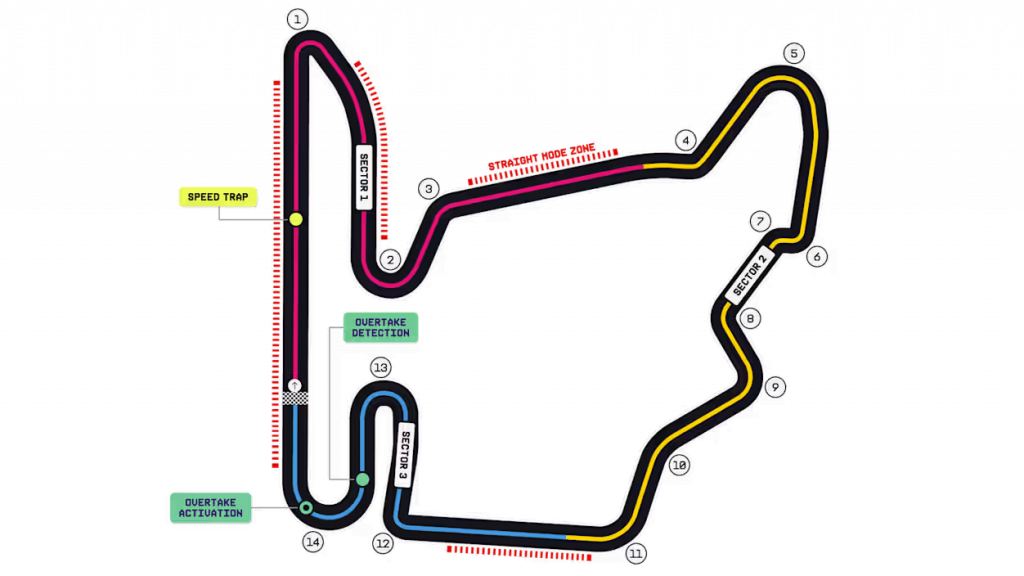
The Hungaroring is often described as “Monaco without the walls.”
Its layout features very few long straights and a continuous sequence of medium and slow-speed corners.
As a result, overtaking is extremely difficult.
Success at the Hungaroring depends on qualifying performance, tire management, race strategy, and driver precision rather than outright top speed. Every mistake can be costly, making it one of the most technically demanding circuits on the calendar.
The Last Battle Before the Summer Break
For many years, the Hungarian Grand Prix served as the final race before Formula 1’s traditional summer shutdown.
Teams usually introduced their final major upgrades before the break, while drivers pushed for maximum points before several weeks away from competition.
Because of this, Hungary often became a natural checkpoint for evaluating the first half of the championship.
Historic Moments at the Hungaroring
The circuit has witnessed many unforgettable moments throughout Formula 1 history.
In 1992, Nigel Mansell secured his first World Championship.
In 1997, Damon Hill came within a lap of delivering an incredible victory for Arrows before a hydraulic failure allowed Jacques Villeneuve to pass him on the final lap.
In 2006, Jenson Button claimed his maiden Formula 1 victory in changing wet conditions.
In 2021, Esteban Ocon earned Alpine’s first Formula 1 victory after a dramatic opening-lap incident changed the course of the race.
In 2024, Oscar Piastri celebrated his first Formula 1 Grand Prix victory, announcing himself as one of the sport’s brightest new stars.
Lewis Hamilton’s Most Successful Circuit
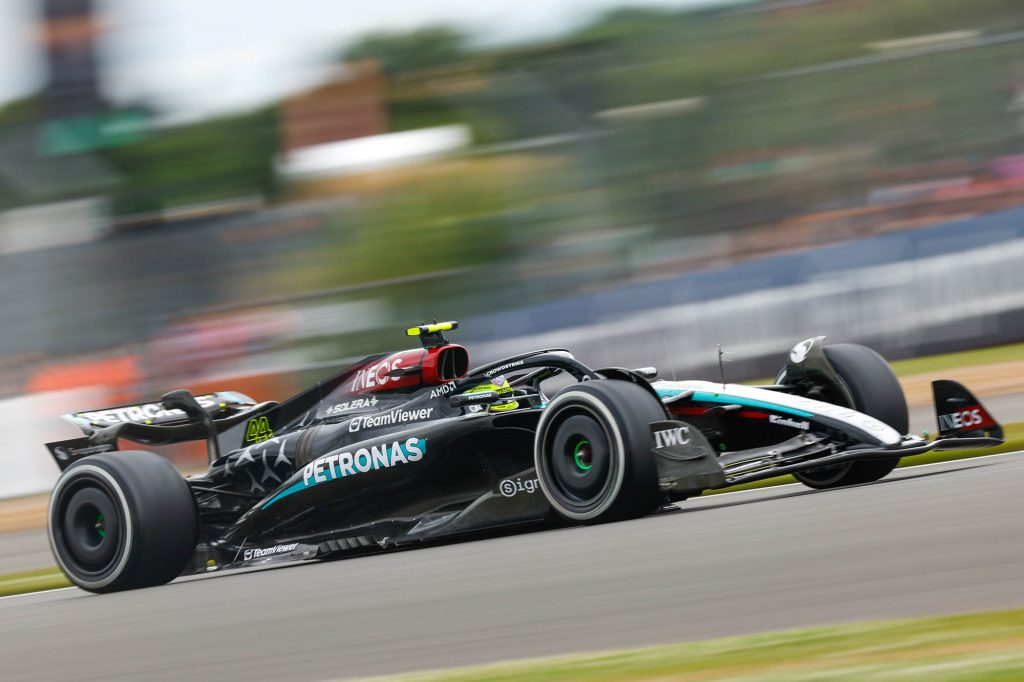
No driver has mastered the Hungaroring quite like Lewis Hamilton.
With eight victories, Hamilton has become the most successful driver in the history of the Hungarian Grand Prix.
His exceptional qualifying performances and race management have made the Hungaroring one of his signature circuits.
Tobacco Companies and Formula 1’s Expansion
Politics was only one part of the story.
During the 1980s, Formula 1 was heavily financed by tobacco companies. Brands such as Marlboro, Camel, Rothmans, Benson & Hedges, John Player Special, and Mild Seven dominated the sport through massive sponsorship programs.
At the same time, tobacco advertising was becoming increasingly restricted across Western Europe.
Eastern Europe, however, represented a largely untapped market.
Bernie Ecclestone recognized that expanding Formula 1 into Eastern Europe would benefit not only the championship itself but also its largest commercial partners.
Philip Morris, the company behind Marlboro, provided financial support during the development of the Hungaroring, and for many years the event officially carried the title Marlboro Hungarian Grand Prix.
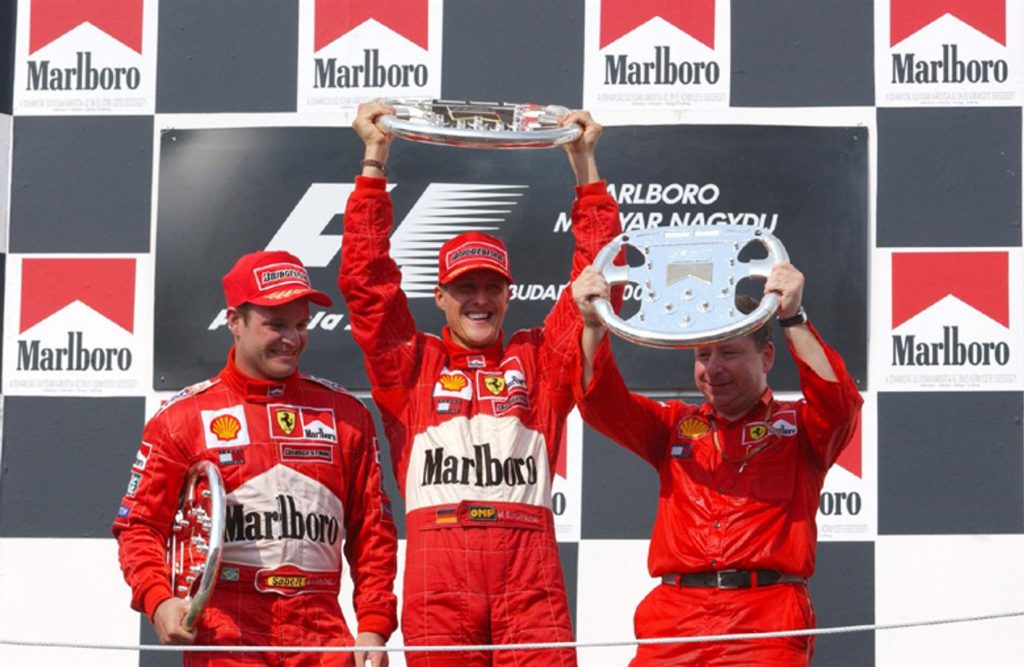
The Hungarian Grand Prix therefore became much more than a sporting event. It represented the intersection of politics, international business, and Formula 1’s global ambitions.
A Race That Changed Formula 1
The Hungarian Grand Prix is not remembered for high-speed racing alone.
Instead, it stands as one of the defining moments in Formula 1 history.
It proved that Formula 1 could expand beyond its traditional Western European roots, opened the door to new international markets, and demonstrated how commercial vision could reshape the future of the sport.
Nearly four decades later, the Hungaroring remains one of Formula 1’s most strategic and historic venues, continuing to play an important role in every championship season.